Most of us are moving through our days faster than we’re actually living them. We eat without tasting, walk without seeing, talk to people while half our mind is somewhere else. We arrive at the end of a week and can barely account for it. Where did it go? It went past us, while we were busy getting to the next thing.
The strange part is that nothing was forcing most of that speed. We picked it up like a habit, and now it runs without us asking. Slowing down isn’t about doing less or escaping to a cabin in the woods. It’s about being present for the life that’s already happening, instead of rushing through it on the way to a moment that never quite arrives.
Your life is made of what you pay attention to
Here’s a thought that’s worth sitting with. Your experience of being alive is built almost entirely out of what you attend to. The moments you actually notice are the ones that become your life. The rest, the parts you move through on autopilot, barely register and quietly disappear.
That means attention isn’t a minor detail of how you live. It’s the raw material. Two people can walk the same street, eat the same meal, live the same ordinary Tuesday, and have completely different lives, because one was present for it and the other was scrolling through it. The difference wasn’t in what happened. It was in what got noticed.
When we hand our attention to whatever is loudest, fastest, and most insistent, we’re not just losing focus. We’re handing over the substance of our days to things that don’t deserve them.
Speed is not the same as living more
We tend to confuse moving fast with getting more out of life. Pack the schedule, multitask, rush from one thing to the next, and surely you’ve squeezed more in. But speed usually does the opposite. When you rush through something, you barely experience it, which means you’ve technically done it without really having lived it.
You can read a book and remember nothing. You can take a trip and spend it anxious about the next stop. You can rush a conversation with someone you love and miss the thing they were actually telling you. The activity happened. The living didn’t. Cramming more in doesn’t give you more life. Often it gives you a longer list of things you were present for less.
Slowing down is what lets the things you do actually land. One meal eaten slowly beats three eaten at your desk. One real conversation beats an afternoon of half-distracted ones. Depth, not pace, is what makes a day feel full.
Paying attention is a skill you can practice
The good news is that attention isn’t a fixed trait. It’s more like a muscle, and most of ours have gone soft from years of constant distraction. You can rebuild it, and you don’t need anything special to start.
Try doing one thing at a time. Just one. Eat without your phone and notice the food. Walk without headphones and notice the street. When someone talks to you, put down whatever you’re holding and actually listen, instead of waiting for your turn to speak. These sound almost too small to matter, which is exactly why they work. Attention is built in small, ordinary moments, not grand ones.
You can also let things be boring. A lot of our rushing is really an escape from the discomfort of an unstimulated mind. We reach for the phone the instant a moment goes quiet. But the quiet moments are where attention actually returns. If you can sit in one without filling it, you start to notice things again. The light. Your own thoughts. The ordinary texture of being alive that speed had blurred into nothing.
Why time feels like it’s speeding up
There’s a reason the years feel faster as they go. When every day blurs together, the mind has nothing distinct to hold onto, and time collapses in memory. A month of identical, half-noticed days barely leaves a trace.
Attention is what slows that down. When you’re genuinely present, a day fills with texture and detail, and it takes up more room in your memory. This is why a single vivid afternoon can feel longer in hindsight than an entire blurred month. Paying attention doesn’t just make life richer in the moment. It’s the closest thing we have to making it feel longer. The more you notice, the more life you get, out of exactly the same number of days.
Start with one ordinary thing
You don’t need to overhaul your life to live it more slowly. You just need to pick one ordinary moment a day and actually be there for it.
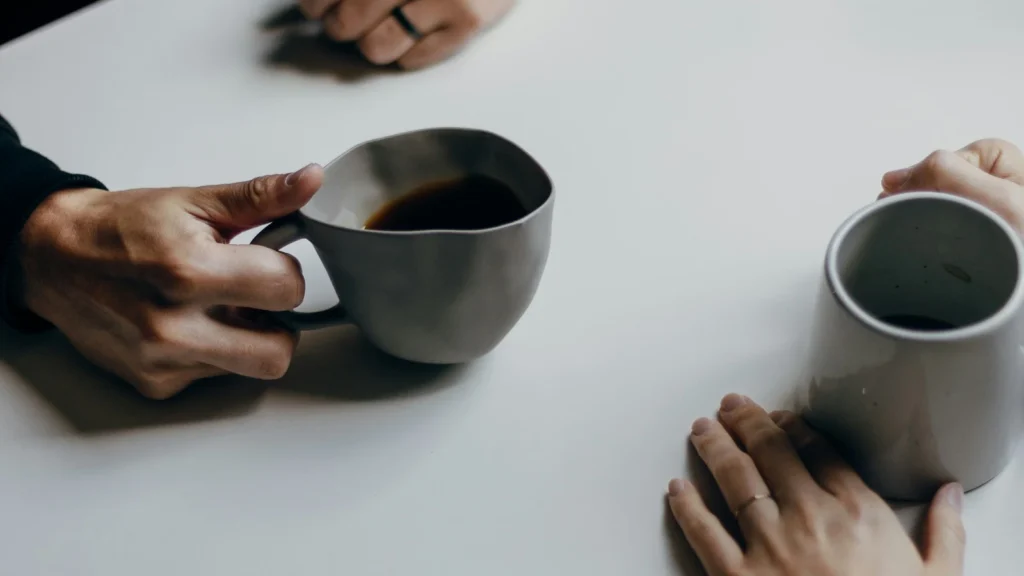
Your morning coffee. The walk to wherever you’re going. The first few minutes with someone you live with. Choose one and give it your whole attention, no phone, no rushing, no planning the next thing while you’re inside it. That’s the entire practice. It costs no time and asks for nothing but presence.
Do that often enough and something shifts. The days stop blurring. You start catching the small things you’d been speeding past for years. Life doesn’t get bigger or busier. It gets closer. And it turns out that most of what we were chasing at full speed was already here the whole time, quietly waiting for us to slow down enough to notice it.
Pick one moment today. Be all the way in it. That’s where the rest of it starts.